NEWS → · Hardware · Google
Google adds TPU 8tx and TPU 8i Max — four TPU systems in a single year
Nov 9, 2026
Google expanded its eighth-generation TPU portfolio on Nov 9, 2026 with two new systems built from its existing silicon: TPU 8tx, for confidential inference, pairing the TPU 8t chip with 5th Gen AMD EPYC hosts so data and weights stay encrypted while in use; and TPU 8i Max, which packages two TPU 8i chips together for double the compute, SRAM and HBM bandwidth in the same rack footprint. Google published no price and no availability date.
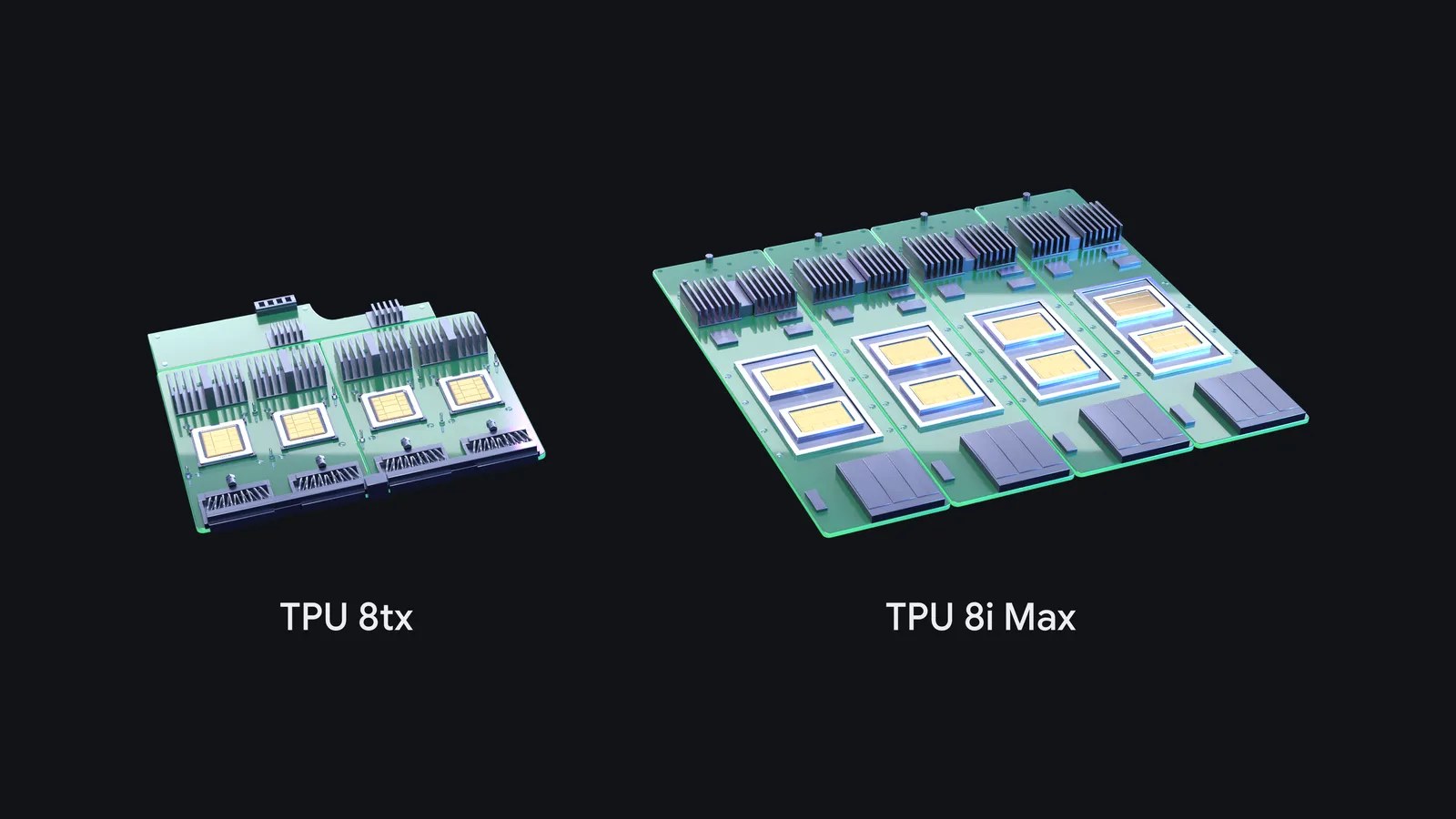
Image: Google via blog.google
What Google announced, in its own post (blog.google, Nov 9, 2026) read the same day: TPU 8tx is built for regulated enterprises and governments running proprietary models and agents on sensitive data — hardware-enforced confidential computing, using the same low-latency Boardfly network as TPU 8i, with up to 2× lower latency than TPU 8t claimed by Google. AMD's own newsroom release the same day confirms the 5th Gen EPYC host half of the design from AMD's side. TPU 8i Max targets massive context windows: two 8i chips in one package, doubling compute, SRAM and HBM bandwidth per package at the same rack footprint. The same post made Cloud Pathways and GKE dynamic slicing generally available and open-sourced TPU Sync.
What Google did not announce matters as much: no price, no region and no availability date appear in its post. Google Cloud's Amin Vahdat told Bloomberg the two systems are due next year, 2027 — so neither belongs in any 2026 or early-2027 capacity plan, whatever the headlines imply.
What it means if you rent GPUs
For GPU renters and buyers this is the strongest non-NVIDIA accelerator signal of the month, on a delay. Confidential inference is a hard buying requirement for finance and health workloads that today pushes people onto specific GPU clouds; TPU 8tx is a direct alternative to price against once it can actually be rented. And 8i Max aims at exactly the long-context agentic serving that is driving H200 and B200 rental demand — doubling HBM bandwidth per package attacks the same memory wall renters pay Blackwell premiums for. Until Google prices them, the honest use of this news is as context and leverage, not as capacity.