NEWS → · Hardware · NVIDIA + Cisco
NVIDIA and Cisco unveil USFP — 400Gb/s-per-lane pluggable optics for AI factories
Nov 3, 2026
Announced on Nov 3, 2026: NVIDIA and Cisco plan USFP, an Ultra-Dense Small Form Factor Pluggable optical module running 400Gb/s per lane — four times the bandwidth and front-panel density of today's 200Gb/s-per-lane modules at about 1.3 times the power efficiency, in a module comparable in size to OSFP.
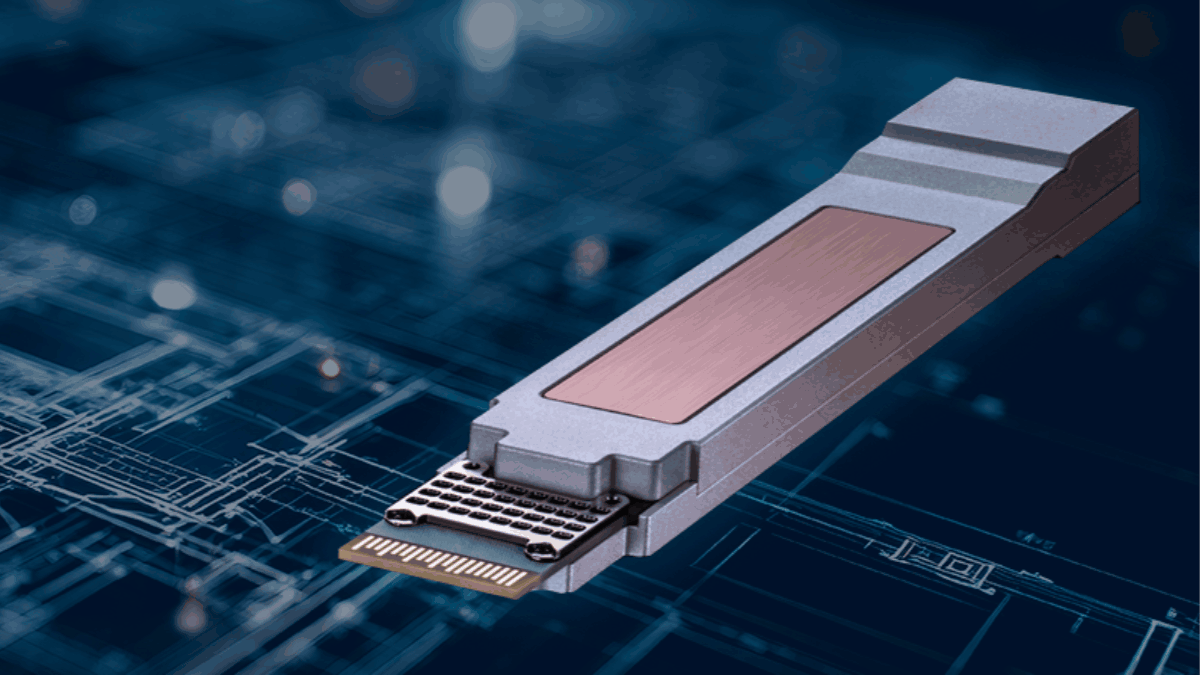
Image: Cisco via newsroom.cisco.com
What was announced, from the joint NVIDIA and Cisco release of Nov 3, 2026: USFP is designed to let AI-factory builders scale from 200Gb/s-per-lane to 400Gb/s-per-lane Ethernet fabrics without overhauling their data-centre infrastructure. Against 200Gb/s-per-lane pluggables it claims 4× the bandwidth and front-panel bandwidth density and roughly 1.3× the power efficiency, which lowers networking's share of a factory's overall power budget as clusters grow.
The ecosystem: NVIDIA and Cisco are working with TE Connectivity and Amphenol on USFP cages, connectors and modules, with more partners expected to join, and the two companies plan to create an open industry specification for USFP through a community-led multi-source project. The work builds on the existing effort to make NVIDIA Spectrum-X Ethernet and Cisco Silicon One-based Ethernet networks run together — the two main Ethernet paths a large GPU cluster can be wired with.
What the companies said: Gilad Shainer, senior vice president at NVIDIA — “Building the world's largest AI factories starts with rethinking the smallest of connections.” Bill Gartner, Cisco's senior vice president for optical systems and optics, said scaling pluggable optics to 400Gb/s per lane “required more than another incremental extension of today's module designs” and that USFP is meant to keep the serviceability and deployment flexibility of pluggable optics at the new density.
Why it reaches a price journal: optics and switching are a real and growing share of what a GPU cluster costs to build and to power, and every watt the network takes is a watt the GPUs do not get. Denser, more efficient pluggables do not change any rental price today — there is no USFP product to rent yet, and no pricing was announced — but they are the kind of supply-side step that decides what the next generation of B300- and Rubin-class capacity costs to run, and therefore what it rents for.
What it means if you rent GPUs
Nothing on the price board moves on this story. File it as a forward cost signal: the interconnect layer of AI factories is being rebuilt for 400Gb/s per lane, as an open specification rather than one vendor's proprietary link — and open, multi-source optics are what keep that layer's prices honest when the clusters built on it start appearing on rental boards.