NEWS → · GPU hardware · NVIDIA
NVIDIA announces Rubin HPC: a new GPU with more than 50,000 CUDA cores for science and engineering, due in 2028
Nov 16, 2026
Announced today at SC26 in Chicago, Rubin HPC is a new GPU in NVIDIA's Vera Rubin platform, built for the simulation and data-processing work behind science, engineering and analytics — with a record count of more than 50,000 CUDA cores on a single GPU, a sparse-data acceleration capability, and seventh-generation NVLink. NVIDIA expects it in 2028, and gives no memory, power, performance or price figures.
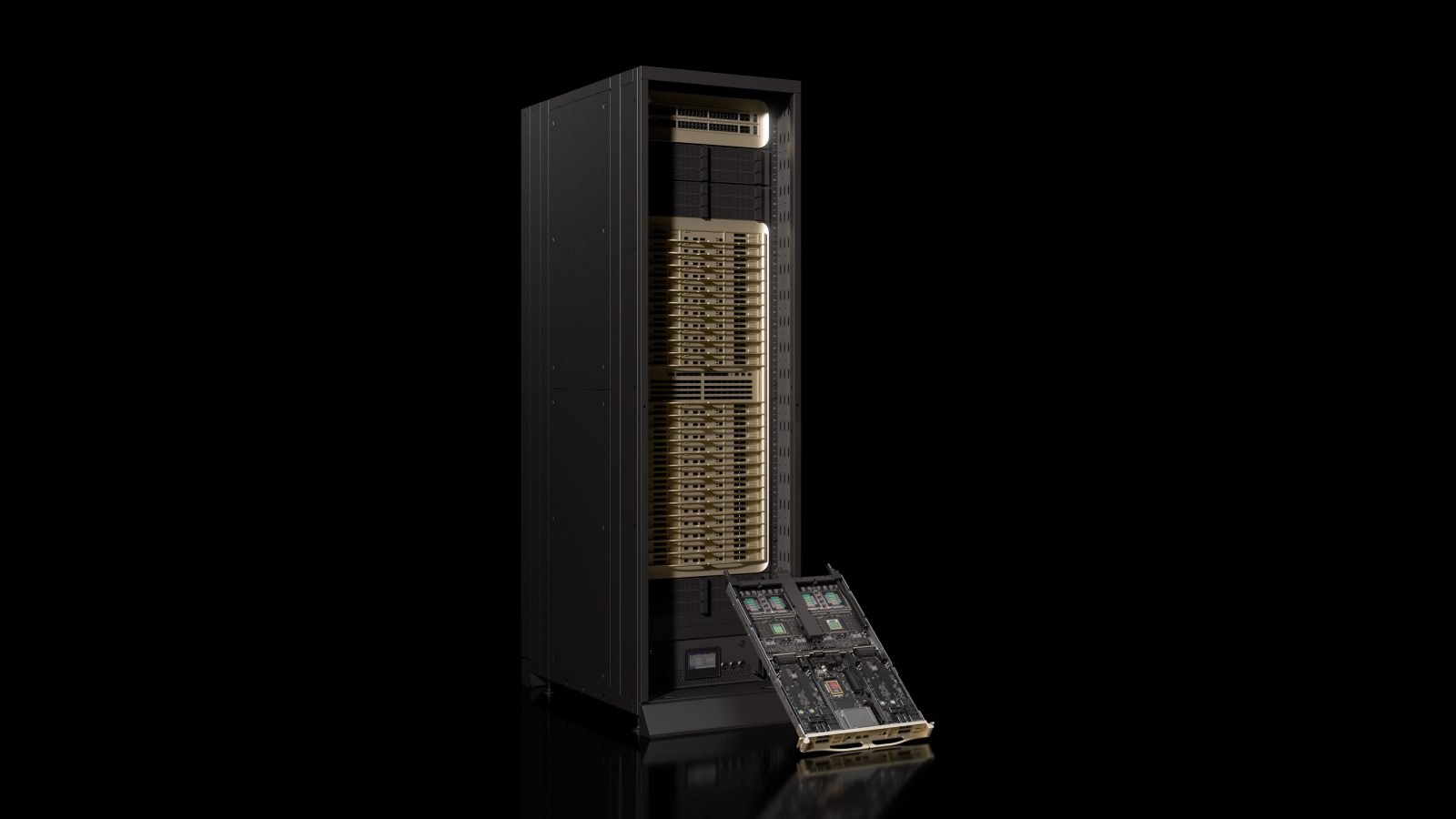
Image: NVIDIA via blogs.nvidia.com
What NVIDIA announced, from its own blog post published Nov 16, 2026 at 16:00 UTC and read first-hand: Rubin HPC is designed for the pattern scientific computing shares across climate models, engineering simulation, genomic analysis and financial risk — an application reaches into an immense dataset, gathers scattered values, calculates, and repeats at enormous scale. The GPU pairs its record CUDA core count with a sparse data acceleration capability intended to keep those cores fed, and a balanced design that scales data movement and compute together rather than compute alone. NVIDIA names the workload patterns it targets: sparse matrix operations, stencil computations, sorting and reductions. Seventh-generation NVLink accelerates GPU-to-GPU connectivity. Ian Buck, NVIDIA's vice president of hyperscale and high-performance computing: “For agents tackling science and engineering, faster simulation means faster discovery.” The post closes with the only availability line given: Rubin HPC is expected to be available in 2028.
What was not announced matters as much for anyone planning hardware: NVIDIA published no memory capacity or bandwidth, no power figure, no FP64 or other performance numbers, no rack or node configuration, and no price. The announcement also landed inside a wider SC26 package from NVIDIA the same afternoon — a Vera CPU rack-scale platform for HPC (192 Vera CPUs per rack, systems from Dell, HPE, Lenovo and Supermicro expected from early 2027) and the Nemotron for Science open package — but Rubin HPC is the only new GPU in it.
What it means if you rent GPUs
For renters and builders this is a roadmap signal, not a bookable card: nothing here changes what can be rented today or in 2027, and with no memory or performance figures there is no honest way to price it against the current board. The signal itself is still worth having on the record. NVIDIA is splitting the Vera Rubin family, adding a purpose-built sibling for simulation-class work — the sparse, data-movement-bound workloads the AI training cards are not shaped for — and tying it to agents that run simulations to test candidate materials, molecules and designs. Anyone whose rental spend is scientific computing now has a dated marker: the HPC-specific Rubin part is a 2028 story, so buying and renting decisions for the next two years still run on today's H100, H200, B200 and GB300-class hardware. We will track Rubin HPC as NVIDIA publishes real specifications, and we will not list it on the board until there is a dated price to verify.